
Why a Damp Meter Reading Is Not a Damp Diagnosis
The instrument can reveal a pattern, but it cannot explain the cause on its own.
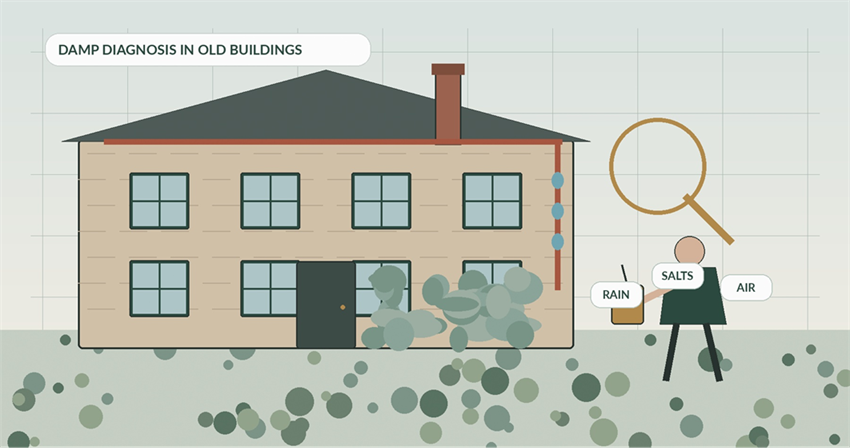
A meter can identify an area worth investigating. The diagnosis comes from the wider evidence.
The main point A handheld moisture meter is a useful surveying tool, but a high reading does not identify the source or mechanism of dampness. In a period property, the surveyor must interpret readings alongside the building’s materials, rainwater disposal, ground conditions, ventilation, temperature, use and repair history before recommending work.
Why damp findings cause so much anxiety
Few words in a survey report worry a buyer more quickly than “damp detected”. It can suggest damaged plaster, decaying timber, expensive treatment, mortgage complications and a long chain of specialist reports before the purchase can proceed.
The concern is understandable. Excess moisture can damage finishes and vulnerable fabric, reduce thermal performance and make a home less comfortable. But identifying that moisture may be present is not the same as identifying where it came from, how serious it is or what should be done about it.
This distinction is especially important in historic and traditionally constructed buildings. Solid masonry, lime mortars, timber floors, old plaster, salts, previous coatings and changing patterns of heating and ventilation can all influence what a surveyor sees and what an instrument records.
What does a moisture meter actually measure?
Despite the name, most handheld “moisture meters” do not directly weigh the water in a wall. They measure another property of the material – such as electrical resistance or dielectric behaviour – that is influenced by moisture. The instrument then converts that response into a number, a reference scale or a wood-moisture-equivalent reading.
Historic England’s 2026 guidance makes the central limitation clear: if something other than moisture affects the property being measured, the displayed reading can be misleading. Electrical resistance meters were originally developed for timber, where they can be very useful when used correctly. Masonry is far more variable, and there is no simple universal relationship between its electrical resistance and its actual moisture content.
That does not make the meter useless. It makes interpretation essential. Comparative readings can help a surveyor map patterns, identify anomalies and decide where to look more closely. The problem begins when one number is treated as a diagnosis.
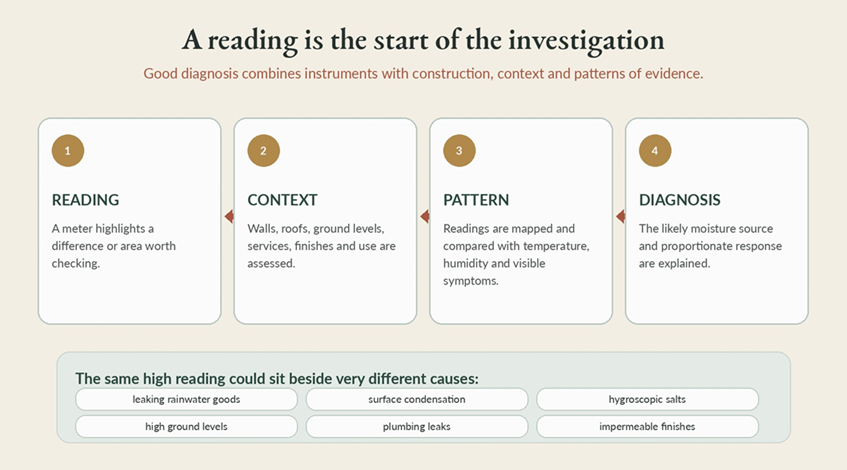
The most useful question is not simply “Is the reading high?” but “Why is this area behaving differently?”
Why an old wall can produce a high reading
A red light or high reference number at the base of a wall may sit beside many different conditions. Some involve liquid water; others involve salts, cold surfaces or construction details. More than one cause may also be present at the same time.
| Rainwater defects A leaking gutter, cracked downpipe, failed flashing or overflowing hopper can saturate masonry well away from the visible internal mark. | Condensation Warm moisture-laden air can condense on cold walls, window reveals, chimney breasts and areas with restricted airflow. |
| Hygroscopic salts Salts in old plaster or masonry can absorb moisture from humid air and also alter electrical resistance readings. | Ground and drainage Raised paving, blocked gullies, leaking drains or poor falls can keep the base of a wall persistently wet. |
| Plumbing and services Small leaks from pipework, heating systems, bathrooms or concealed services can create local moisture patterns. | Modern finishes Dense cement render, waterproof coatings, vinyl paint or sealed floors may restrict evaporation and displace symptoms. |
Three examples of how poor interpretation creates unnecessary work
Example 1: the lower wall is automatically labelled “rising damp”
A few high readings are taken above the skirting. The report recommends a chemical damp-proof course, removal of plaster and waterproof replastering. Quotations are requested, the lender asks questions and the buyer begins negotiating around a treatment specification.
A fuller inspection may instead reveal an overflowing downpipe, external paving close to the internal floor level, dense cement pointing or a cold unventilated corner. Until those possibilities have been considered, the treatment proposal is ahead of the diagnosis.
Example 2: mould at a window reveal becomes a wall-damp problem
Black spotting and a high surface reading are recorded around a window. Yet the reveal is one of the coldest internal surfaces, the room has high humidity and furniture restricts air movement. The primary issue may be surface condensation rather than water rising through the structure.
Example 3: a chimney breast is treated without understanding salts
Old chimney breasts often contain combustion residues and salts. If the flue is disused, cold or poorly ventilated, those salts may absorb moisture from the air and disrupt finishes. Injecting the base of the wall does not address that mechanism and may sacrifice sound historic plaster unnecessarily.
What a proper damp investigation should include
The investigation should be proportionate to the property and the symptoms. Some cases can be understood during one careful visit. Others require monitoring, targeted sampling or opening-up with the owner’s consent.
| 1 | Understand the construction Identify the wall, floor and roof build-ups, the likely original materials and later changes that may have altered moisture movement. |
| 2 | Inspect outside and inside Follow the likely route of water from roof coverings and rainwater goods down to walls, ground levels, gullies, drains and internal finishes. |
| 3 | Consider occupation and environment Review heating, ventilation, humidity, room use, cold surfaces and whether symptoms are seasonal or linked to particular weather. |
| 4 | Map patterns rather than chase one number Compare locations, heights, materials and surfaces. Combine meter readings with visual evidence, temperature, relative humidity and thermal images where appropriate. |
| 5 | Use targeted tests only when they answer a clear question Material sampling, carbide testing, depth readings or monitoring should have a defined purpose and their limitations should be explained. |
| 6 | Report the diagnosis and its confidence A useful report separates observations from conclusions, identifies the most likely cause, explains uncertainty and recommends proportionate next steps. |
Why “get a damp specialist” may not be enough
Further investigation is sometimes entirely appropriate. The difficulty is that the term “specialist” can describe very different services. A contractor who earns income from installing a treatment system may approach the inspection differently from an independent surveyor who is paid only for diagnosis and advice.
That does not mean every contractor’s recommendation is wrong. It means the client should understand the commercial relationship, the scope of the inspection, the evidence supporting the diagnosis and whether alternative causes or lower-intervention options were considered.
| A useful report should answer five questions What was observed? What evidence supports the conclusion? What is the likely moisture source? How urgent is it? What is the least disruptive effective response? |
How Smith Heritage approaches damp in traditional buildings
Smith Heritage Surveyors is independent and does not install chemical damp-proofing systems or sell a remedial product. Our role is to investigate the building, explain the likely cause and provide practical advice that is appropriate to the construction.
Depending on the property and the question being investigated, our Damp and Timber Surveys may use thermal imaging, atmospheric readings, inspection cameras, comparative moisture readings and targeted material testing. Those tools support the diagnosis; they do not replace building pathology or professional judgement.
We look at the whole moisture system: roofs, gutters, walls, floors, ground levels, drains, services, ventilation, heating, finishes and previous interventions. The aim is to solve the cause where possible, avoid unnecessary damage to historic fabric and give the client a clear order of action.
The conclusion: treat the cause, not the colour on the meter
A high reading deserves attention, but it should open the investigation rather than close it. In an old building, the safest route is evidence-led diagnosis, proportionate testing and repairs that respect how the fabric was designed to manage moisture.
Before agreeing to injection, tanking, extensive replastering or timber treatment, ask what source has been identified, what evidence supports it and whether simpler maintenance, ventilation or compatible repair could address the problem.
| NEED AN INDEPENDENT DAMP DIAGNOSIS? Visit smithheritagesurveyors.com to discuss a Damp and Timber Survey |
Sources and further reading
- Historic England: Assessing Damp in Historic Buildings (2026)
- Joint position statement: Investigation of moisture and its effects in traditional buildings
- SPAB Technical Advice Note: Control of Dampness
- Historic England: Principles of Repair for Historic Buildings
- Smith Heritage Surveyors: Damp and Timber Survey