
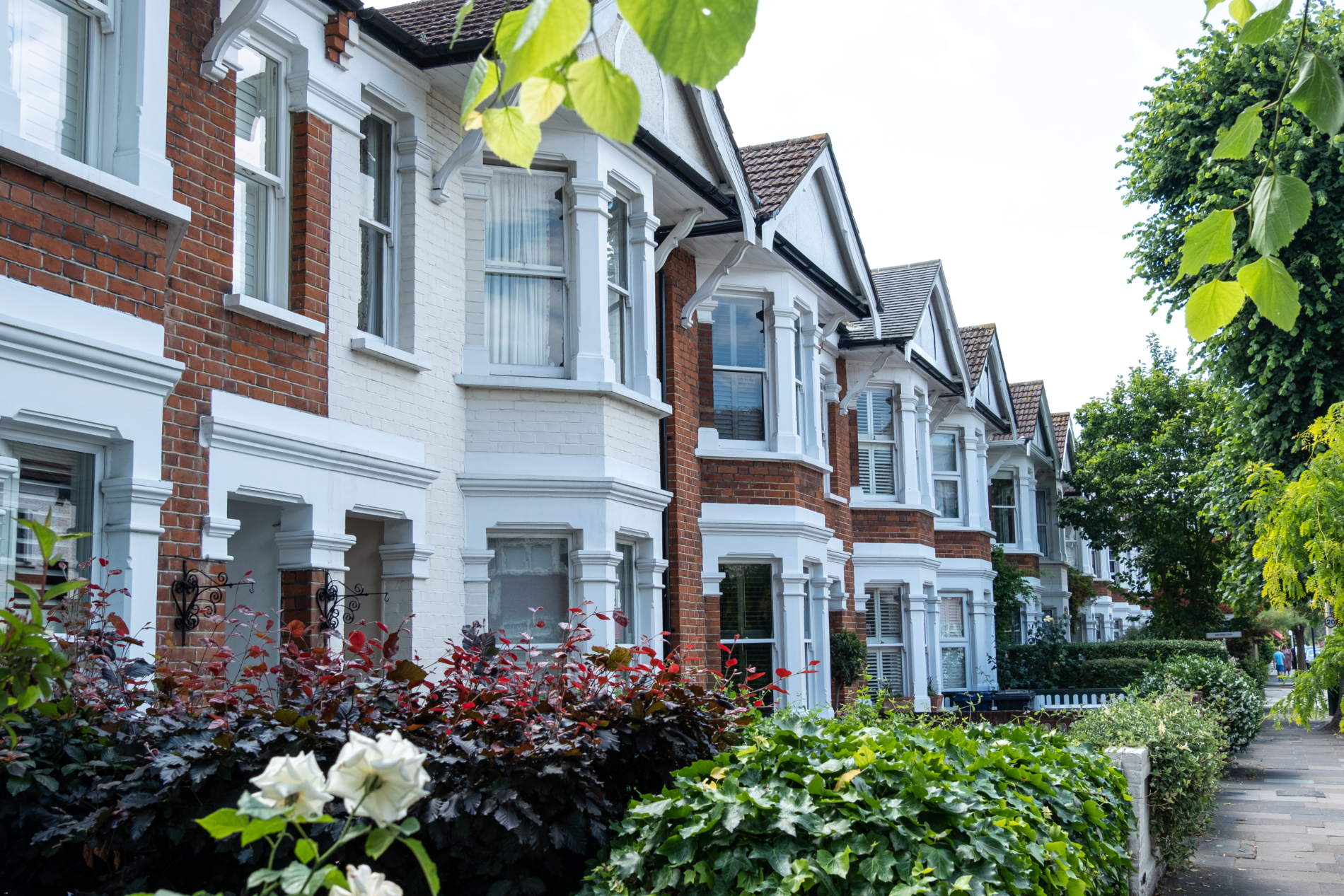
If you are buying a Victorian or Edwardian property in London, selecting the right survey is not simply a formality, it is fundamental to understanding what you are purchasing.
These buildings were constructed using traditional materials and methods that behave very differently from modern construction. Yet many surveys still assess them as if they were contemporary homes. The result is often confusion, misdiagnosis, and in some cases, unnecessary concern.
At Smith Heritage Surveyors, we specialise in Victorian and Edwardian building surveys in London, and in most cases a RICS Level 3 Building Survey is the appropriate choice.
Why Victorian and Edwardian Buildings Require a Different Approach
Victorian and Edwardian houses were built using a form of construction that has evolved over centuries. As explored in established literature on the subject, including works such as The Victorian House Explained and studies of period construction, these buildings rely on a combination of solid masonry, lime mortars, and timber structures working together as a system.
Unlike modern cavity wall construction, they do not aim to exclude moisture entirely. Instead, they are designed to absorb and release moisture through evaporation, supported by ventilation and permeable materials.
This distinction is critical. Much of the guidance produced across the heritage sector consistently emphasises that traditional buildings must be understood on their own terms. When assessed incorrectly, perfectly normal behaviour—such as minor moisture movement or historic settlement—can be mistaken for defects.
A specialist survey is therefore not just beneficial, but essential.
Why a Level 3 Building Survey Is Recommended
A RICS Level 3 Building Survey provides the depth of analysis required for buildings of this type and age.
Rather than simply identifying visible issues, it considers how the building was constructed, how it has changed over time, and how those changes are affecting its current performance. This includes a detailed assessment of materials, structural behaviour, moisture movement, and ventilation.
In contrast, a Level 2 HomeBuyer Report is generally insufficient. It tends to focus on surface-level observations and does not fully engage with the complexities of traditional construction. This can result in generic advice or recommendations that are not appropriate for the building.
For Victorian and Edwardian properties in London—many of which have been altered repeatedly over the last century—a more detailed and informed approach is required.
Victorian and Edwardian Houses in London
London’s housing stock is dominated by Victorian terraces and later Edwardian developments, each reflecting the social and architectural priorities of their time.
Victorian houses, particularly in urban settings, were often built to maximise density. They tend to have narrow plans, long internal layouts, and a clear hierarchy of spaces. Despite this, they incorporate features such as high ceilings and large windows to improve light and air movement.
By the Edwardian period, there was a shift towards wider plots and more generous proportions. Influenced by the Arts and Crafts movement, houses became less constrained, with improved layouts and a greater emphasis on comfort.
Publications and research into these buildings highlight that, despite stylistic differences, both periods rely on the same fundamental construction principles. Understanding those principles is key to understanding condition.
How These Buildings Perform
Traditional buildings function as breathable systems. Moisture enters and leaves the structure in a controlled way, facilitated by lime mortars, porous masonry, and natural ventilation.
Problems arise when this balance is disrupted.
Guidance consistently stresses that many of the issues seen in Victorian and Edwardian houses today are the result of later interventions, rather than original defects. The introduction of cement-based materials, impermeable coatings, and modern alterations can prevent moisture from evaporating, leading to dampness and decay.
Similarly, blocking chimneys, sealing floors, or reducing ventilation can create conditions that the building was never designed to accommodate.
A properly conducted survey will identify not just the presence of defects, but the underlying causes—something that is particularly important in London, where properties have often undergone multiple phases of alteration.
Common Misunderstandings
There remains a widespread perception that Victorian and Edwardian houses are inherently damp, cold, or structurally problematic. In reality, these assumptions are often based on a misunderstanding of how traditional buildings behave.
Solid walls, for example, are frequently criticised for allowing moisture ingress. However, studies of their performance demonstrate that while they may absorb moisture, they are also highly effective at releasing it, provided they remain permeable.
Similarly, what is often diagnosed as rising damp is, in many cases, the result of trapped moisture at low level caused by raised ground levels, impermeable finishes, or poor ventilation.
Thermal performance is also closely linked to moisture content. A dry wall performs significantly better than a damp one, meaning that inappropriate repairs can have a direct impact on comfort and energy efficiency.
A specialist survey helps to cut through these misconceptions and provide a clear, evidence-based understanding of the building.
Typical Issues in London Period Properties
While Victorian and Edwardian houses are generally robust, certain issues do recur, particularly in London conditions.
Movement is not uncommon, especially in areas of clay soil. However, much of this movement is historic and not indicative of ongoing structural failure. Bay windows can sometimes exhibit separation due to their shallow construction, and timber elements may show signs of decay where ventilation has been compromised.
Roof coverings, drainage, and external details are also frequent areas of concern, particularly where original materials have been replaced or poorly maintained.
The key point is that these issues must be understood in context. A crack, for example, is not necessarily a structural problem—it may simply reflect the building’s history.
Why Choose Smith Heritage Surveyors?
At Smith Heritage Surveyors, we focus specifically on period property surveys in London, with particular expertise in Victorian and Edwardian buildings.
Our approach is grounded in an understanding of traditional construction and informed by established conservation principles. We do not simply report defects—we explain how the building works, what has changed, and what needs to be done.
This allows our clients to make informed decisions, whether they are purchasing, investing, or maintaining a property.
Book a Victorian or Edwardian Building Survey in London
If you are purchasing a Victorian or Edwardian house, the right survey will provide clarity and confidence at a critical stage.
Whether you are a private buyer, investor, or owner of a listed property, understanding the condition and behaviour of the building is essential.
👉 Request a specialist Victorian or Edwardian Building Survey in London
👉 Speak directly with an experienced heritage surveyor
We provide clear, practical advice tailored to traditional buildings across London and the South East.
Final Thoughts
Victorian and Edwardian houses are not inherently problematic—they are often simply misunderstood.
When assessed and maintained correctly, they are durable, adaptable, and capable of performing exceptionally well. The key is to understand how they were built, how they have evolved, and how to work with them rather than against them.