

Local surveyors. Specialist knowledge. Clear advice before you commit.
Independent RICS Building Surveyors in Hampshire
Buying a property in Hampshire? Before exchange, you need to understand more than whether the house looks well presented. You need to know how it is built, what condition it is really in, what work may be required and which questions should be answered before you take ownership.
Smith Heritage Surveyors is an independent, RICS-regulated surveying practice providing Level 2 Home Surveys, Level 3 Building Surveys, Listed Building Surveys and specialist property investigations throughout Hampshire.
With an office in the heart of Winchester and just over the border in Salisbury, our team works across the county, surveying everything from modern family homes and post-war houses to Georgian townhouses, Victorian terraces, thatched cottages, timber-framed buildings and substantial country properties.
Our particular strength is understanding older, listed and traditionally constructed buildings, but we survey homes of all ages.
One survey per surveyor per day. Independent advice. Detailed reporting. Support beyond the report.
Get Your Hampshire Building Survey Quote
Not sure which survey you need? Send us the property listing and we’ll help you choose.
Your Local Heritage Specialists
Specialist Surveys for Historic and Period Properties in Hampshire
Hampshire has an extraordinary variety of housing.
Winchester alone contains medieval buildings, Georgian townhouses, Victorian terraces and later suburban development. Across the wider county, the building stock ranges from rural timber-framed cottages and thatched houses to Edwardian homes, converted agricultural buildings, post-war housing and contemporary developments.
Different buildings require different questions.
A defect that may be straightforward in a modern cavity-wall house can have very different implications in a timber-framed cottage or solid-wall Georgian property.
That is why we do not approach every survey as a standard checklist.
We consider the property’s age, construction, alterations, condition, setting and your plans for it, helping you understand not simply what we have found, but what those findings mean for you.

We Give Your Property Time
A detailed survey cannot be rushed.
Each of our surveyors undertakes no more than one survey per day and a maximum of three per week, allowing time for the inspection, consideration of the findings, report preparation and client discussion.
We would rather inspect fewer properties properly than build our business around volume.
We Are Truly Independent
Smith Heritage Surveyors is not owned by an estate agent, mortgage lender or property developer.
We work for you.
If we find significant defects, questionable alterations or substantial future liabilities, we will explain them clearly. Equally, we will not turn every sign of age into a crisis simply to make a report sound dramatic.
Our role is to give you the evidence and context needed to make your own informed decision.
Historic Buildings Are a Specialism, Not an Add-On
We regularly work with listed buildings, period properties, timber framing, thatched roofs, traditional masonry and historic construction.
Understanding an older property requires more than identifying that something is cracked, damp or weathered. The surveyor needs to understand how the building was intended to perform, how it has been altered and whether previous repairs are compatible with its construction.
You Can Speak to Us Afterwards
The service does not end when your report arrives.
Your surveyor is available to discuss the findings, explain priorities and answer reasonable follow-up questions. Our team also remains accessible by telephone, email and WhatsApp.
A good survey should leave you with fewer questions, not a longer list of them.
For Properties That Deserve More Than a Basic Inspection
RICS Level 3 Building Surveys in Hampshire
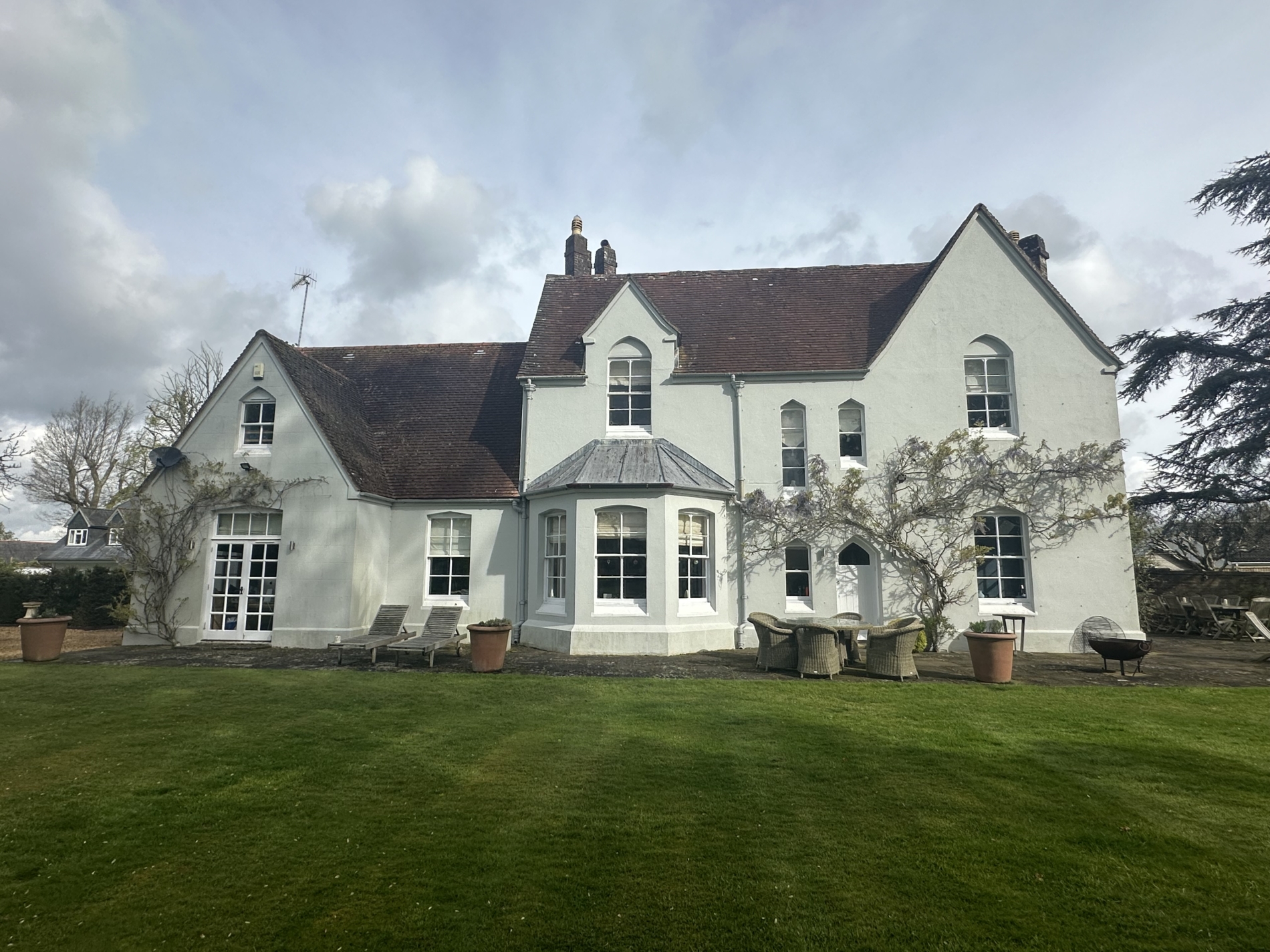
A RICS Level 3 Building Survey is the most detailed level of RICS home survey and is particularly suitable for older, larger, altered, unusual or visibly defective properties, as well as homes where significant refurbishment is planned.
It is often the appropriate choice for Hampshire’s Georgian, Victorian and Edwardian homes, substantial country properties, converted buildings and properties that have been significantly extended or altered.
Our Level 3 survey is designed to help you understand the building as a whole.
We assess visible and accessible construction, identify significant defects and explain their likely causes and implications. Rather than simply presenting a list of problems, we provide practical advice on repairs, maintenance priorities and further investigations where required.
The inspection can include consideration of:
- Roof coverings, chimneys, flashings and rainwater disposal; accessible roof structures and timbers; walls, floors, ceilings, windows and doors; evidence of dampness, condensation and water penetration; timber deterioration; cracking and structural movement; previous alterations and extensions; visible drainage concerns; external ground levels and their relationship with the building; maintenance liabilities; and matters requiring further specialist or legal investigation.
Where appropriate and conditions permit, telescopic pole-camera or drone inspection can provide additional information about otherwise difficult-to-view high-level areas.
Where reasonably possible, we can also provide indicative repair-cost guidance to help you understand the potential scale of works. These are budgeting estimates rather than substitutes for contractor quotations.
RICS Level 3 Building Surveys start from £750.
Explore what is included in detail RICS Level 3 Building Survey
Understand the Building and the Responsibility That Comes With It
Listed Building Surveys in Hampshire
Purchasing a listed building can be enormously rewarding, but it also brings additional responsibilities.
Hampshire contains an exceptional stock of listed and historic buildings, including medieval timber-framed houses, Georgian townhouses, historic farmhouses, thatched cottages and later period homes.
Our Listed Building Surveys provide a detailed, conservation-led assessment of the building’s condition while considering the historic materials and construction methods that make it significant.
We look beyond whether an element simply appears “old”.
We consider how the building has evolved, how previous repairs or alterations may be affecting it and whether modern interventions are compatible with the original fabric.
Particular attention may be given to historic timber structures, traditional masonry, lime mortars and plasters, roof structures and coverings, moisture movement, timber decay, alterations and extensions, historic joinery, previous repair methods and matters requiring further investigation.
Where visible alterations raise questions about planning permission or Listed Building Consent, we identify those matters for your solicitor to investigate.
A survey cannot certify that every historic alteration received the appropriate consent, but it can help identify where questions should be asked before you become the owner.
Appropriate conservation is not about making an old building look new.
It is about understanding what should be repaired, what can be retained and where intervention is genuinely necessary.

When a Five-Hundred-Year-Old Roof Needs More Than a Standard Survey
Hampshire Case Study: A 15th-Century Cruck-Framed Home
One of our Hampshire listed-building instructions involved a remarkable 15th-century timber-framed property constructed around substantial oak cruck frames.
The building had survived for more than five centuries, but that did not mean it was free from problems.
Our inspection identified significant deterioration associated with the roof. The thatch was failing and water ingress had affected parts of the historic supporting structure beneath.
Areas of the primary timber frame had deteriorated where structural members met the masonry, while previous repairs undertaken over the building’s long history also required careful consideration.
The important question was not simply:
“Is the timber old?”
It was:
“Which material remains serviceable, what has deteriorated, what is causing it — and how should it be repaired without unnecessarily destroying historic fabric?”
The subsequent repair approach prioritised retention of the surviving historic structure, with traditional repair methods and appropriate replacement only where deterioration made intervention necessary.
This is exactly why specialist knowledge matters when surveying historic buildings.
Age is not a defect. But age does not make a building immune from defects either.
The skill lies in understanding the difference.
Heritage specialists by your side
Buying a Thatched Property in Hampshire?
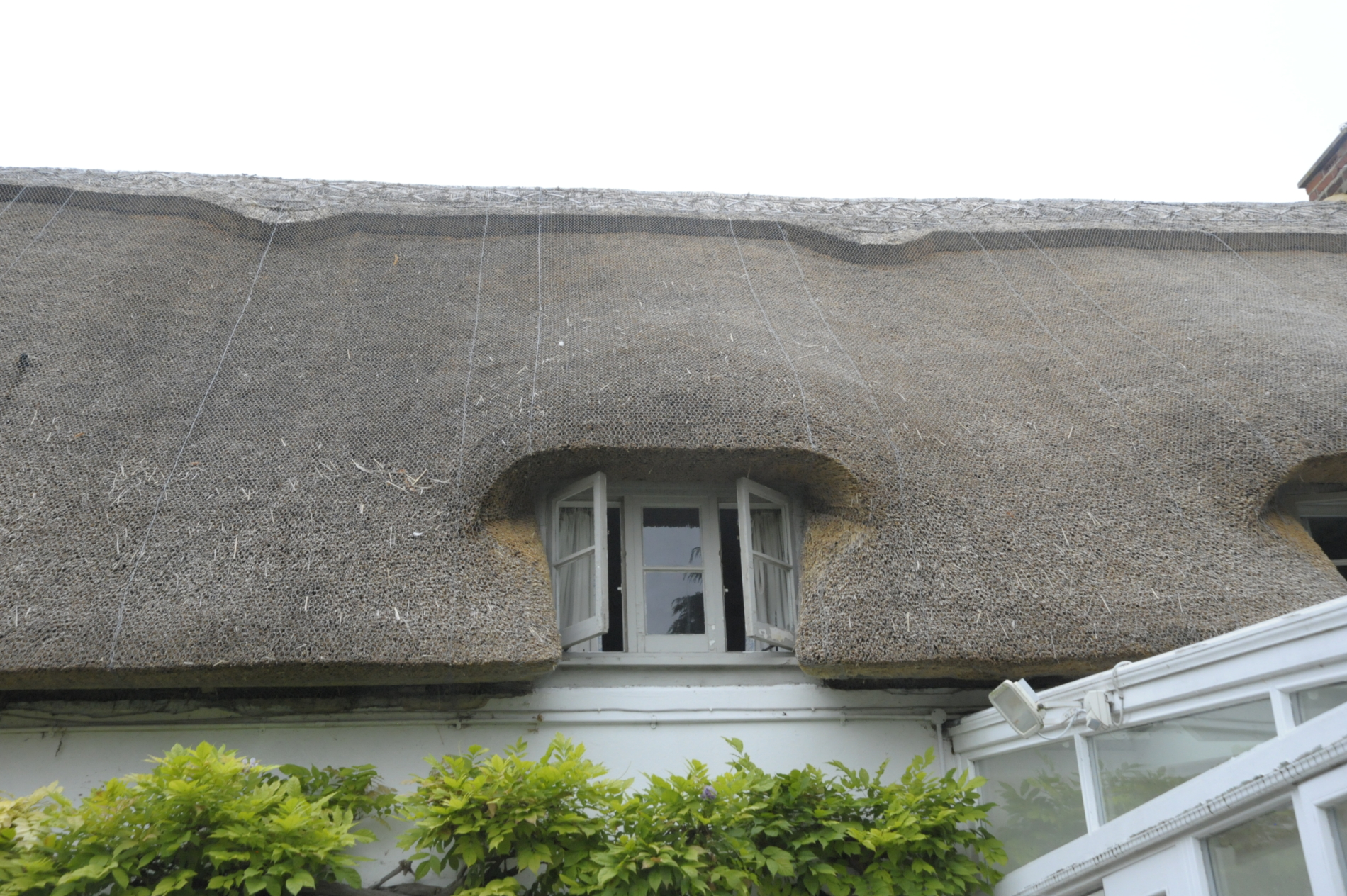
Hampshire has a strong tradition of thatched construction, particularly among rural cottages and historic properties.
A thatched roof requires a different approach from conventional tiles or slate.
Our team has undertaken specialist training relating to thatched-roof inspection and has experience surveying listed thatched properties in Hampshire.
We consider the visible condition of the covering, ridge, detailing, chimney relationships and accessible roof structure, together with evidence of water ingress or deterioration.
Where specialist thatching advice is required, we will say so.
A building survey should never pretend to replace another specialist where additional expertise is genuinely necessary.
We are one of a few surveyors in the country recommended by the thatching advisory service
A Moisture Reading Is Not a Diagnosis
Independent Damp & Timber Surveys in Hampshire
Dampness is one of the most frequently misunderstood issues in residential property.
A high meter reading may indicate an area requiring investigation, but it does not by itself tell you why moisture is present.
Our damp and timber investigations consider the wider building.
That may include rainwater disposal, roof defects, external ground levels, ventilation, condensation risk, traditional solid-wall construction, plumbing leaks, previous cement-based repairs and the condition of timber components.
Where further testing is appropriate, our investigations can incorporate specialist equipment including thermal imaging, atmospheric monitoring and other diagnostic methods.
We are independent surveyors. We do not sell chemical damp-proofing systems or earn money by recommending remedial products.
Our income comes from providing professional advice.
That separation matters.

Where we cover
What We Commonly Inspect in Hampshire
Winchester’s Georgian & Victorian Homes
Winchester contains some exceptional historic residential architecture.
Older townhouses and terraces may incorporate traditional brickwork, solid masonry walls, suspended timber floors, chimney breasts, older roof structures and later alterations.
Changes made over generations can be just as important as the original construction.
Removed chimney breasts, roof conversions, extensions and replacement materials all deserve careful consideration.
Rural Cottages, Farmhouses & Barn Conversions
Rural Hampshire contains buildings constructed using timber framing, traditional masonry, thatch and materials that behave very differently from modern cavity-wall construction.
Converted agricultural buildings can be particularly interesting because modern insulation, services and structural alterations may have been introduced into much older structures.
Understanding how those layers interact is essential.
Edwardian, Inter-War & Post-War Homes
Our work is not limited to historic buildings.
Hampshire contains extensive Edwardian, 1920s, 1930s and post-war residential development, and our team surveys these properties regularly.
Defects and maintenance requirements differ according to construction period, which is why we recommend the survey based on the individual building rather than applying an arbitrary age cut-off.
Modern & Newer Homes
Modern construction can still contain defects.
Where a conventional modern property is suitable for a Level 2 survey, we will tell you. Where its condition, alterations or construction warrant more detailed investigation, we will explain why.

Hub office in Winchester & covering across Hampshire
Local Building Surveyors
Our Hampshire office is located at:
Westgate Chambers
Staple Gardens
Winchester
Hampshire
SO23 8SR
From Winchester, we carry out surveys throughout the county, including Southampton, Portsmouth, Basingstoke, Andover, Romsey, Alton, Petersfield, Stockbridge, Bishop’s Waltham, Eastleigh, Lymington, the New Forest and surrounding villages.
If your property lies outside these areas, send us the listing. We regularly travel further when a property requires our particular expertise.
Frequently Asked Questions About Building Surveys in Hampshire
Our RICS Level 3 Building Surveys start from £750. The final quotation depends on the property’s size, construction, condition, complexity and the agreed scope of inspection.
Send us the property address or estate-agent listing and we will provide a quotation.
A Level 2 survey is generally suitable for a conventional property in reasonable condition.
A Level 3 survey provides a more detailed assessment and is commonly appropriate for older, larger, altered, unusual or significantly defective buildings, or where major works are contemplated.
If you’re unsure, send us the listing and we will help you choose.
Yes. Listed and historic properties are a major part of our work. Our surveys take account of traditional materials, historic construction, previous alterations, conservation considerations and appropriate repair methods.
Yes. Our surveyors have experience of thatched properties and specialist thatch-inspection training.
Where the condition or proposed works require a master thatcher or other specialist, we will explain that recommendation clearly.
Absolutely. We actively encourage clients to discuss the findings with their surveyor.
Let's Understand It Before You Commit.
Buying a Property in Hampshire?
Whether you’ve found a modern family home in Basingstoke, a Victorian terrace in Winchester, a rural cottage near Petersfield, a New Forest property or a Grade II listed farmhouse, we can help you understand what you’re buying.
Send us the property address or Rightmove listing, together with anything that particularly concerns you.
We’ll help you identify the appropriate survey, explain the scope and provide a quotation.
Independent advice. Specialist knowledge. Time to do the job properly.
RICS Level 3 Building Surveys from £750.
What our customers say about us
With over 200 five star reviews, Smith Heritage Surveyors has earned a strong reputation for delivering clear, professional surveying advice.
If you are purchasing, maintaining, or responsible for a historic or period property, Smith Heritage Surveyors can provide clear, professional advice.
Please contact us to discuss your property and arrange an appropriate survey.